
- Technology
- Technology FAQs
IMAGIO® | Technology FAQs
Technology FAQs
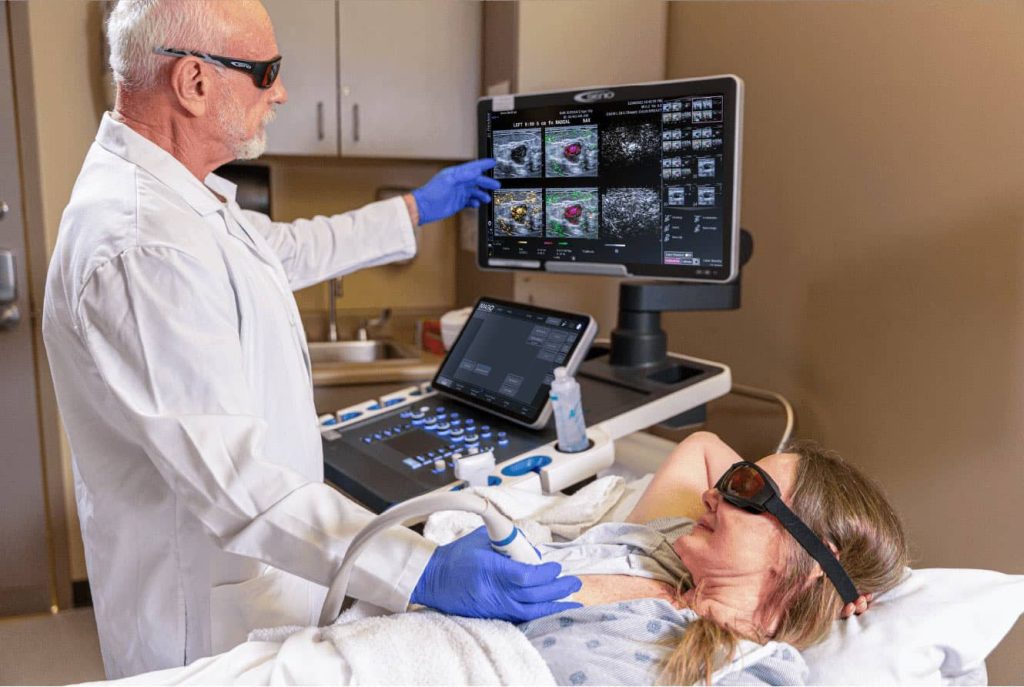
Seno’s technology produces high-resolution images related to the performance of tissue; this class of imaging technique is known as functional imaging. By comparison, existing technologies such as X-ray and ultrasound produce anatomical images which only show the structure of tissue. In Seno’s technology, the images are generated based on hemoglobin concentration and its level of oxygenation; the growth of malignant tumors is supported by additional new blood vessels, a process known as angiogenesis, to provide the necessary hemoglobin for that growth. The resulting increased concentration of hemoglobin, especially that which has given up its oxygen to the cancer cells, is a prime indicator of cancer. Seno’s technology shows this type of functional information. Images are generated without using ionizing radiation (X-rays) or injection of contrast agents.
Seno’s technology produces high-resolution images related to the performance of tissue; this class of imaging technique is known as functional imaging. By comparison, existing technologies such as X-ray and ultrasound produce anatomical images which only show the structure of tissue. In Seno’s technology, the images are generated based on hemoglobin concentration and its level of oxygenation; the growth of malignant tumors is supported by additional new blood vessels, a process known as angiogenesis, to provide the necessary hemoglobin for that growth. The resulting increased concentration of hemoglobin, especially that which has given up its oxygen to the cancer cells, is a prime indicator of cancer. Seno’s technology shows this type of functional information. Images are generated without using ionizing radiation (X-rays) or injection of contrast agents.
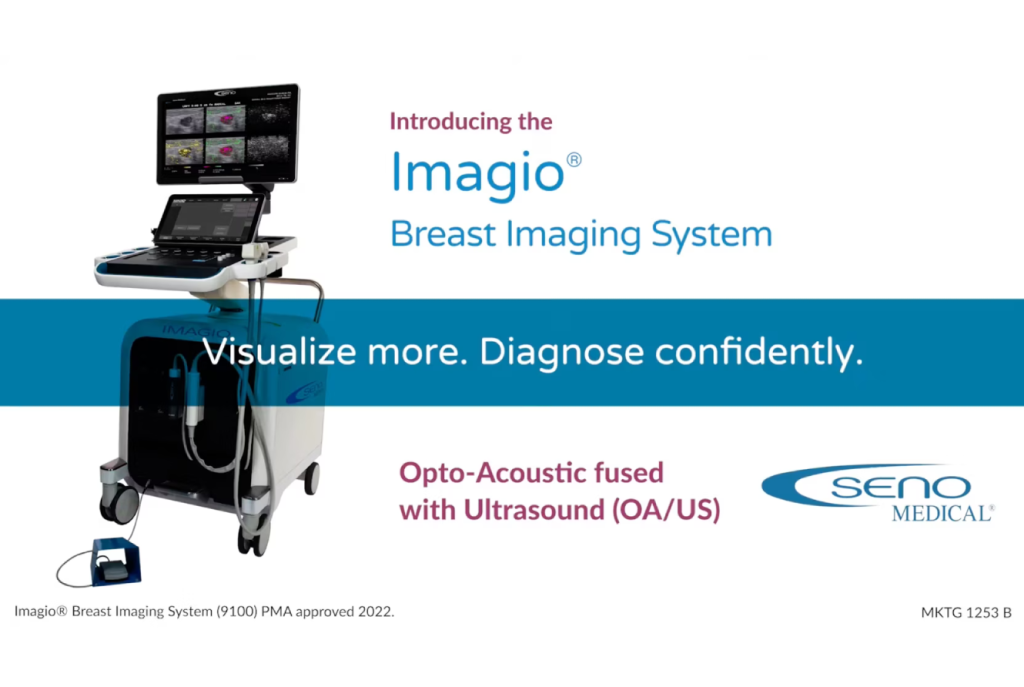
In the United States, PMA approval for sale and use of Seno’s newest version Imagio® Breast Imaging System (9100) has been granted by the Food and Drug Administration (FDA) Center for Devices and Radiological Health.
In Europe, the current Model 9100 is pending CE mark under MDR.
The light used by the Imagio® system is not harmful to skin and is within acceptable guidelines for maximum permissible exposure. Similarly, induced temperature-rise and pressure-rise parameters are comparable to that seen in other medical devices. No X-rays are used in the production of images.
Patents have been filed for the various aspects of Seno’s opto-acoustic imaging system and its technology. Additionally, because of the nature of the science and engineering on which the technology is based, significant expertise resides within the Seno team.
The basic science of opto-acoustics was first discovered in 1880 by Alexander Graham Bell, but the application of this effect was not made practical until the technology for producing stable laser light was refined in the 1970’s. In the late 1990’s, a PhD biophysicist developed the first successful method of combining laser light with the latest ultrasound detection techniques in a safe and effective way, thus providing the first opto-acoustic images in human tissue. This biophysicist became the lead researcher and inventor of opto-acoustics for clinical use, and he, along with many other Seno scientists and engineers, were instrumental in initiating the first commercial product development. Other than Seno Medical Instruments, no other company has demonstrated such a combination of expertise and motivation towards commercialization.
Seno completed a pivotal study in the US and a post-market surveillance and clinical follow-up study in Europe to evaluate if this non-invasive imaging system (non-ionizing radiation, no injected contrast agents) has the potential to help doctors more effectively determine which patients need biopsies. Please watch this Website for information about completed study results and future clinical trials. To learn more visit clinicaltrials.gov.
Opto-acoustics and photoacoustics are closely related but not the same thing. Both fields involve the generation and detection of acoustic waves using light, but there are some differences in terminology and applications. Opto-acoustics typically refers to the broader field of studying the interaction between light and sound. Photoacoustics, on the other hand, specifically refers to the generation of sound waves by light absorption in a material. So, while photoacoustics is a subset of opto-acoustics, the latter term encompasses a broader range of phenomena and applications beyond just the generation of acoustic waves by light.
contact us
Available Now
Imagio® is FDA approved for commercial distribution in the U.S. and ready for your patients.
Watch
View Videos
Watch the Imagio Product Overview, How OA/US Works, and Hear from an Expert.

Seno Spotlight